


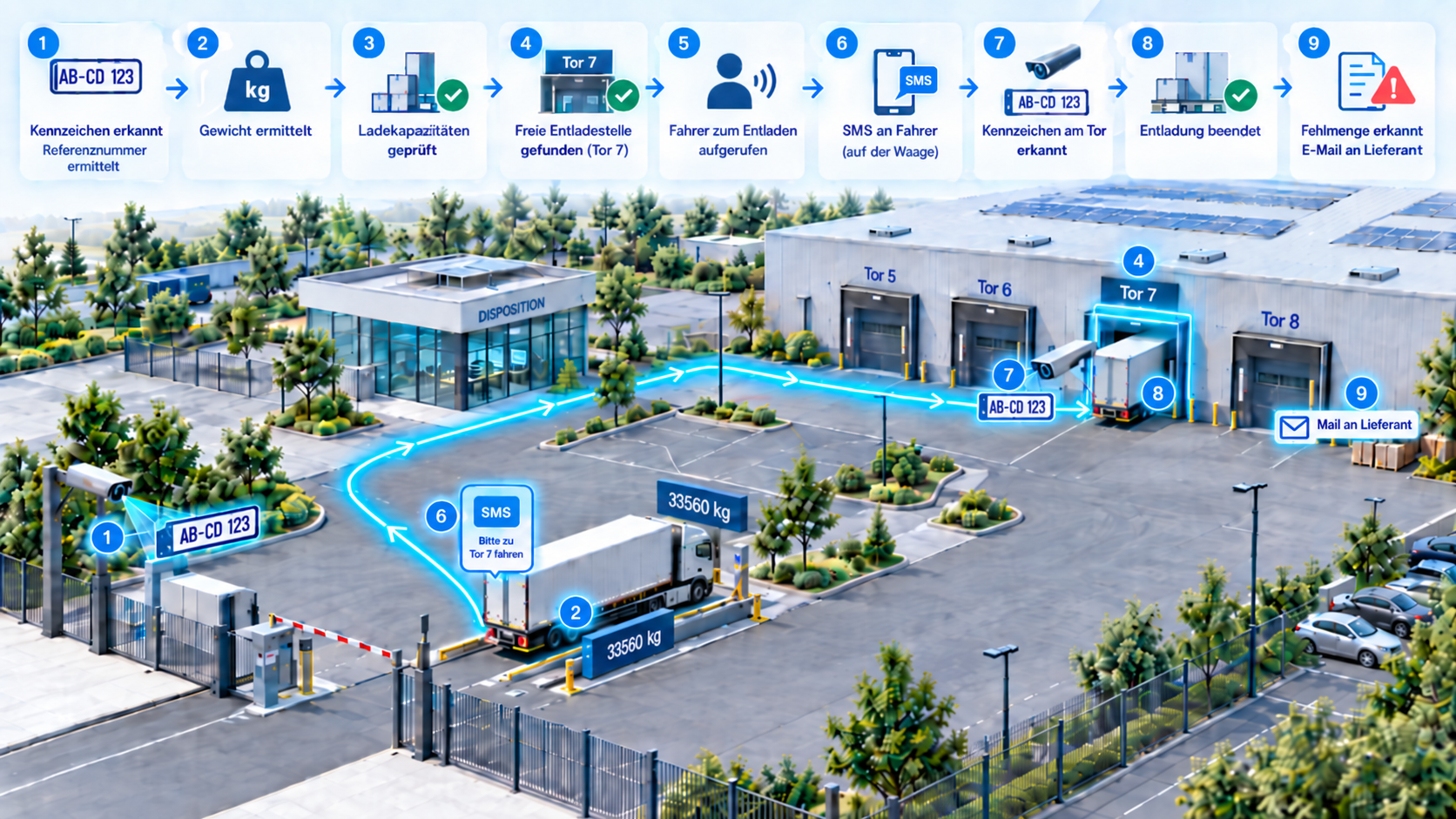
 Yard
Yard
Automatic plant gate check-in
ANPR recognizes the license plate, matches it against the TMS, and assigns the ramp slot digitally.
unter 3 Minuten statt 15–25

Goods receipt without retyping: 90 seconds instead of 20 minutes per delivery note.
Design material flows from goods receipt to goods issue and connect warehouse automation with your SAP processes.
The task starts with the material flow — goods receipt, put-away, picking, goods issue — and with the documents that accompany each of these steps. The document AI reads CMR notes, advice notes and customs papers, checks them against SAP, and flags only the deviation; barcodes and labels are captured without a handheld scanner. What is carried through the warehouse on paper and typed up today runs as a booking through SAP EWM instead.
In the end there's a booking in SAP EWM instead of a stack of paper on the desk. The review step stays with the person — but only where the document AI flags a deviation.

Entry time from 30 minutes to 1 minute — measured, not estimated.
Connect time slots, carrier coordination, check-in, gate assignment and check-out into one continuous site process.
Today, time slot, check-in, gate assignment and check-out are three systems and a phone call. Merged together, they become one process: the camera reads the license plate, the gate opens, the arrival is posted, the driver gets their instruction — in their own language, without a call. Manually this costs 30 minutes per entry, semi-automated 6, fully automated one.
The difference is measured, not estimated: 30 minutes per entry manually, 6 semi-automated, one fully automated — with the same staff and no second system alongside SAP.

Spot bottlenecks before they cost you throughput.
Connect production planning, machine data, packaging and material supply with ERP and warehouse processes.
Production planning, machine data, packaging and material supply depend on the same resources as the yard: forklifts, drivers, ramps. Where these resources are continuously assessed, forecasts replace reports — capacity, bottleneck, demand. And the system tells you which vehicle or machine will fail tomorrow, while there's still time to repair it today.
Whoever sees the bottleneck one shift earlier reschedules orders instead of losing them. And maintenance learns today what will fail tomorrow — while there's still time to repair it.

First use case in 4 weeks, measurable value within the first quarter.
Translate requirements into system concepts, customizing and extensions, and integrate standard modules and add-ons into operations.
Before an agent executes anything, the ERP has to be able to do it: stage 2 of the roadmap checks the existing backend functions and builds what's missing for execution. Extensions are built where the standard ends — directly in EWM, TM and YL, without a data export and without a middleware project. Not a year-long project: start with one use case, value from the first quarter.
Not a year-long project: the entry point is a use case, the value shows up in the first quarter, and whatever gets built stays extensible within the standard.

Cameras and devices post directly into SAP — without a handheld scanner.
Select and procure devices, and synchronize terminals, barriers, scales and warehouses with your SAP landscape.
Terminals, OCR and license-plate cameras, barriers, scales and racking are not run side by side but hung on the same process. The camera detects the damage on arrival, and the complaint is generated automatically — with photo, date and delivery note. The compute power for this sits in your own server room: no cloud subscription, no data transfer, operating costs equal to the electricity bill.
The camera detects the damage on arrival, and the complaint is generated automatically — with photo, date and delivery note. The only operating cost is the electricity bill.

Autonomy is earned, not assumed — in six stages.
Identify suitable processes, define decision boundaries and trial controlled AI execution starting from the pilot.
First the process is written down and approved, then it's separated: what can be automated by rules and what needs judgment. The first agents run with mandatory approval and full monitoring; their authority only grows once accuracy is proven against KPIs. Process ownership stays with the department — whoever knows the process also decides on the AI.
Autonomy is earned: an agent's authority only grows once its accuracy is proven against KPIs. Process ownership stays with the department — whoever knows the process also decides on the AI.
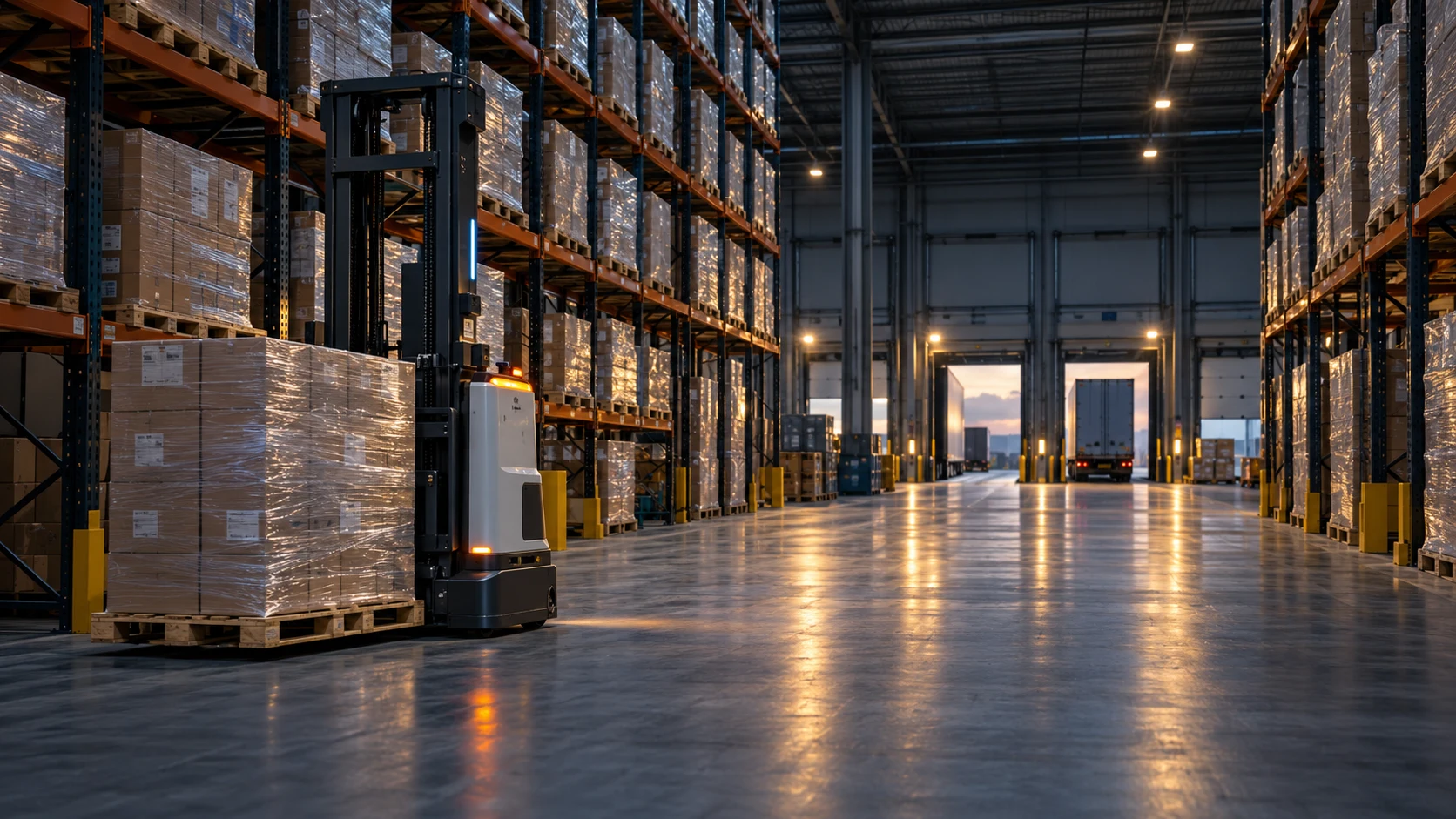
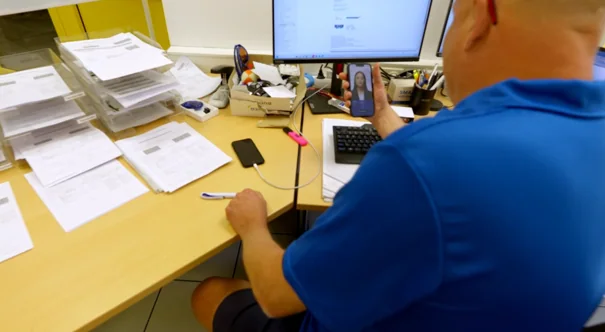
AI reads, understands and responds — in the plant, in the warehouse and on the road, in any language.
200 supply-chain emails become 20 tasks — in the order they actually matter.
Advice notes, date changes, complaints: the AI reads the supply chain's mail and sorts it by what actually holds up the chain. You see 20 tasks instead of 200 emails.
90 seconds instead of 20 minutes per delivery note. CMR, advice notes and customs papers are read, checked against the order, and the deviation is flagged.
The shift supervisor speaks, the AI writes: machine and order assigned, maintenance informed. No form, no callback, no lost hour.
Time slot, ramp, delay — automatically, in the driver's own language, around the clock. Dispatch no longer has to call and chase.
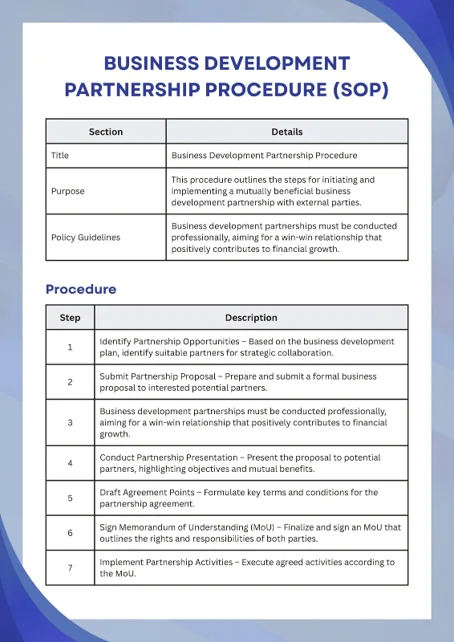
AI evaluates, compares and recommends — across plant, warehouse and transport.
Answers to real supply-chain questions instead of a monthly report.
"Which carriers had poor ETA accuracy this week?" — an instant answer from TM, EWM and the scale. Not a report that only appears at month end.
Stock, demand and open orders continuously reconciled: the bottleneck shows up on the screen three weeks ahead — not on the day of the customer commitment.
The plan is checked against incoming goods: which batch is missing for which shift — with a rescheduling suggestion before the line stops.
Not a number, but a recommendation: "Avoid carrier X today — two alternatives with free capacity." The decision stays with the person.
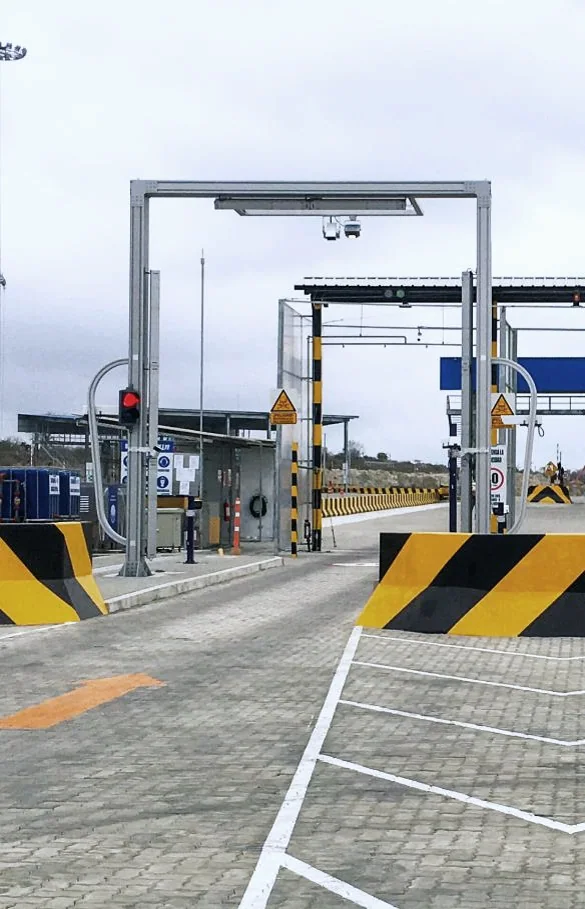
Cameras continuously see what no human can continuously capture — at the gate, on the line and at the pallet.
Gate check-in in 8 seconds instead of 8 minutes.
8 seconds instead of 8 minutes: the camera reads the license plate, the gate opens, the system books the arrival in SAP EWM.
The camera checks every cycle, not just a sample. Rejects are removed before they're packed, stored and shipped.
Damage detected on arrival, complaint created — with photo, time and delivery note. Load securing is checked before departure.
Pallet, batch and SSCC are read at entry and loading, without a handheld scanner. Traceability happens along the way.
AI builds workflows itself and executes them in SAP — without an IT ticket and without a second system.
70% of the routines between plant, warehouse and road are fully automatable.
CMR, goods-receipt posting, advice notes — handled fully automatically through SAP EWM. No manual typing, no rework.
Completion confirmation, consumption and batch are posted from the machine to SAP PP — without a terminal at the line and without a collective posting at shift end.
Entry, position, ramp, exit and the sequence of routes — coordinated without a radio call and without misunderstanding.
The system detects which machine and which vehicle will fail tomorrow — repair it today instead of standing still tomorrow.
 Yard
Yard
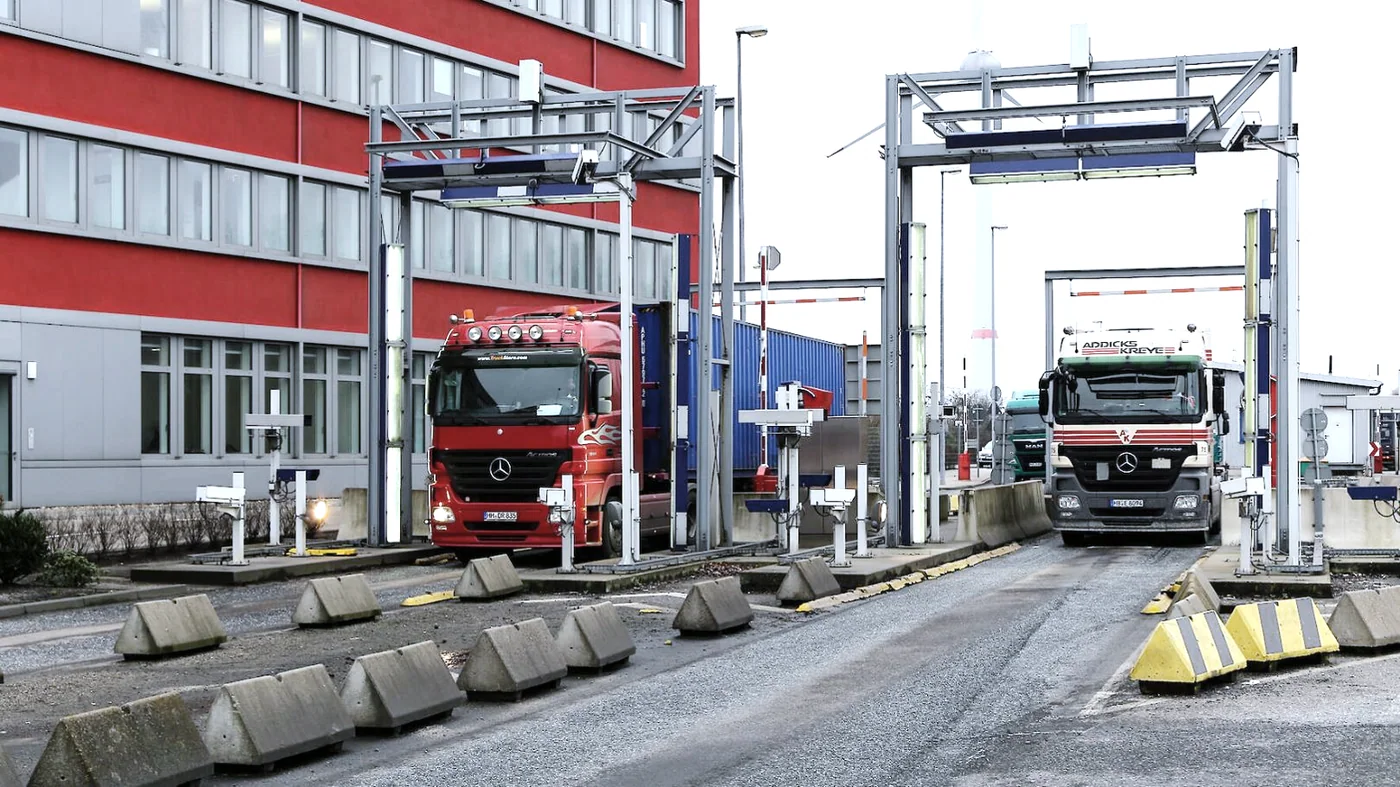
ANPR recognizes the license plate, matches it against the TMS, and assigns the ramp slot digitally.
Models calculate the likely arrival from history, traffic, weather and known bottlenecks.
Deviations in GPS and ETA are detected two to four hours before escalation.
Routes keep being optimized while under way; new orders, time slots and traffic feed in continuously.
Optimal pick paths, similar orders batched together — shorter distances, more throughput per shift.
Slotting by picking frequency and goods movement, accounting for the seasonal shift.
Demand forecast per SKU, with order quantities and safety stock calculated dynamically.
MES and logistics coupled in real time: production changes trigger transport adjustments immediately.
Network models calculate hub structures, find detours and recommend carrier consolidation.
The assistant sees all running transports, prioritizes on its own, and presents the cases to the dispatcher.
Defined decisions run entirely without intervention; response time drops from minutes to seconds.
A virtual image of the network simulates scenarios in real time before they become reality.
The camera assesses the load and load securing, text recognition reads the delivery note, the posting goes directly to SAP EWM — with an image attached to the document.
An agent reads the order forecast, stock and shift schedule, calls the transport orders itself, and writes in plain sentences why it decided that way.
The invoice is read, matched against the freight contract and shipment, and only surfaced where it deviates — with the line item in question.
The quantity is detected during unloading and credited to the carrier's account; the difference reports itself, to the driver and in accounting.
 SAP
SAP
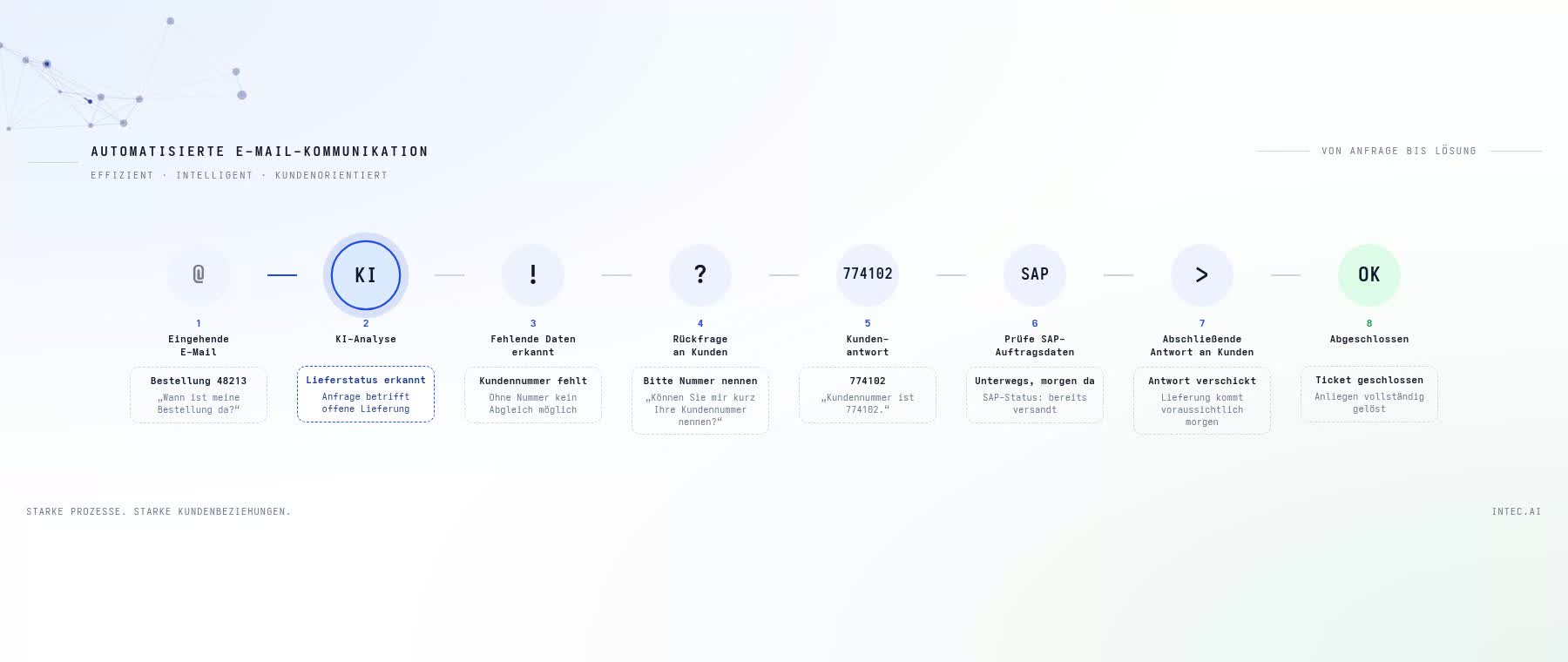
Die E-Mail wird gelesen, eine fehlende Kundennummer gezielt nachgefragt und die Antwort direkt aus dem SAP-Auftrag gebaut — von der Anfrage bis zur Lösung ohne Bearbeiter.
ANPR recognizes the license plate, matches it against the TMS, and assigns the ramp slot digitally.
The camera at the gate reads the license plate, the system finds the expected delivery, checks the appointment, papers and access — and sends the driver straight to the right ramp without stopping. The gatekeeper turns from data-entry clerk into decision-maker for the exception.
Models calculate the likely arrival from history, traffic, weather and known bottlenecks.
It's not the plan that says when the truck arrives, it's the model. As a result, unplanned delay notifications to customers also drop by 20 to 30 percent.
Deviations in GPS and ETA are detected two to four hours before escalation.
The most expensive disruption is the one you only hear about at the ramp. Whoever sees it hours earlier can still plan — instead of reacting.
Routes keep being optimized while under way; new orders, time slots and traffic feed in continuously.
A route isn't a single decision made in the morning, but a sequence of decisions throughout the day. The model recalculates it as soon as the situation changes.
Optimal pick paths, similar orders batched together — shorter distances, more throughput per shift.
In manual warehouses, up to 60 percent of picking time is pure travel time. That's exactly where the lever is — not in picking faster.
Slotting by picking frequency and goods movement, accounting for the seasonal shift.
Today's best storage slot is the wrong one in November. A model that anticipates the shift rearranges before the season arrives.
Demand forecast per SKU, with order quantities and safety stock calculated dynamically.
Safety stock is bought uncertainty. The better the forecast, the less of it has to sit on the shelf.
MES and logistics coupled in real time: production changes trigger transport adjustments immediately.
The special transport on Friday evening is almost always the bill for information that arrived two days too late.
Network models calculate hub structures, find detours and recommend carrier consolidation.
Optimizing individual routes gets you a few percent. Optimizing the structure of the network gets you the rest.
The assistant sees all running transports, prioritizes on its own, and presents the cases to the dispatcher.
Not another dashboard, but a pre-selection: what do I need to decide now — and what has the system already resolved?
Defined decisions run entirely without intervention; response time drops from minutes to seconds.
Autonomy is not all or nothing. It's a clearly defined corridor in which the system may act — and a boundary at which it brings in a person.
A virtual image of the network simulates scenarios in real time before they become reality.
Before a decision reaches the yard, it has already run once in the digital twin. What fails there costs nothing.
The camera assesses the load and load securing, text recognition reads the delivery note, the posting goes directly to SAP EWM — with an image attached to the document.
Wareneingang per Sichtkontrolle und Zettel — eine falsch gesicherte oder unvollständige Anlieferung fiel erst in der Fertigung auf. Die Kamera bewertet Ladung und Ladungssicherung, die Texterkennung liest den Lieferschein, die Buchung geht direkt nach SAP EWM — mit Bild am Beleg. Der Nachweis liegt beim Beleg, nicht in einem zweiten Ordner; die Reklamation ist am Tor entschieden, nicht drei Schichten später.
An agent reads the order forecast, stock and shift schedule, calls the transport orders itself, and writes in plain sentences why it decided that way.
Der Nachschub an die Linien lief nach Erfahrung. Fehlte ein Vormaterial, stand die Schicht — und niemand konnte danach sagen, warum. Ein Agent liest Auftragsvorschau, Bestand und Schichtplan, ruft die Fahraufträge selbst und schreibt in Sätzen dazu, weshalb er so entschieden hat. Die Versorgung ist eine Entscheidung mit Begründung, keine Gewohnheit; wer sie prüfen will, liest sie nach.
The invoice is read, matched against the freight contract and shipment, and only surfaced where it deviates — with the line item in question.
Frachtkosten wurden stichprobenweise kontrolliert. Was nicht in der Stichprobe lag, wurde bezahlt. Die Rechnung wird gelesen, gegen Frachtvertrag und Sendung gestellt und nur dort vorgelegt, wo sie abweicht — mit der Zeile, um die es geht. Die Prüfung ist vollständig, die Arbeit weniger: bearbeitet wird die Abweichung, nicht der Stapel.
The quantity is detected during unloading and credited to the carrier's account; the difference reports itself, to the driver and in accounting.
Tauschpaletten und Rollbehälter wurden auf Zetteln geführt. Der Bestand stimmte selten, geklärt wurde per Telefon. Die Menge wird beim Abladen erkannt und dem Konto der Spedition zugeschrieben; die Differenz meldet sich selbst, beim Fahrer und in der Buchhaltung. Das Leergutkonto ist am Abend richtig, Streitfälle haben ein Bild und einen Zeitpunkt.
Die E-Mail wird gelesen, eine fehlende Kundennummer gezielt nachgefragt und die Antwort direkt aus dem SAP-Auftrag gebaut — von der Anfrage bis zur Lösung ohne Bearbeiter.
Eine Anfrage zum Lieferstatus kam per Mail, ohne Kundennummer. Bisher hieß das: Postfach, Rückfrage, Auftrag im SAP suchen, Antwort tippen — rund 15 Minuten Bearbeitung. Die KI liest die Mail, erkennt die fehlende Angabe, fragt genau danach, gleicht die Antwort mit dem SAP-Auftragsstatus ab und schickt die fertige Antwort. Aus 15 Minuten werden Sekunden, der Vorgang ist geschlossen, bevor ein Mitarbeiter ihn geöffnet hätte.
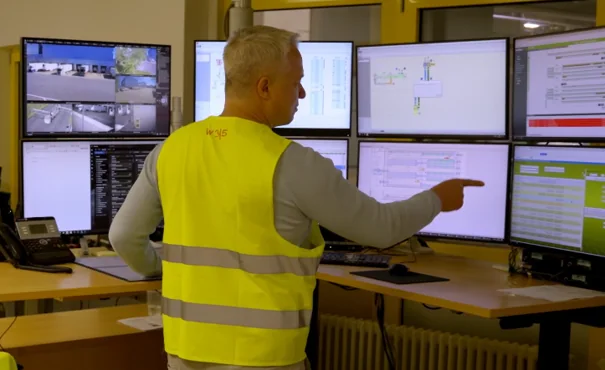 Production
Logistics
Production
Logistics
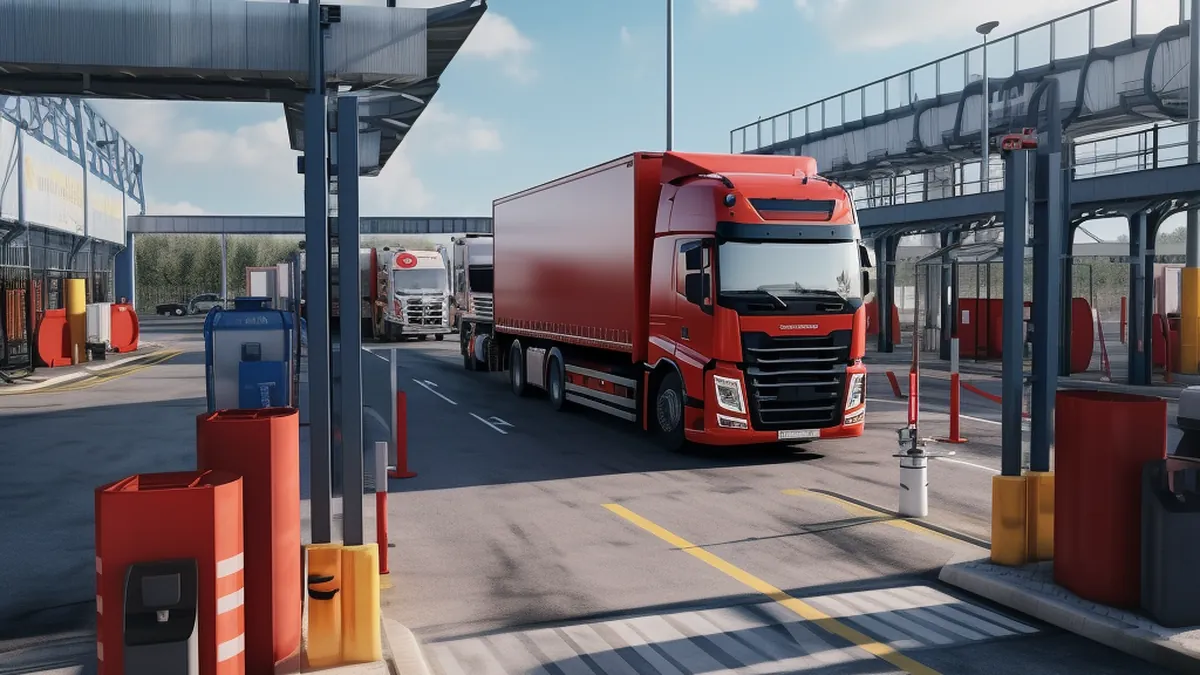 Transport
Customers from retail, chemicals, automotive and logistics have relied on our solutions for 15 years.
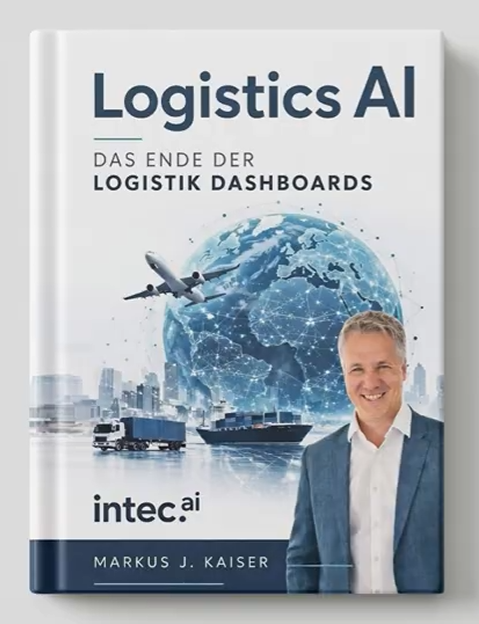
The end of logistics dashboards
MARKUS J. KAISER
The book looks at the shift from a visible to an acting system, based on practice in the yard, warehouse and transport.

Founder & Managing Director · INTECIO GmbH / intec.ai GmbH
Technology changes. Curiosity stays.
Markus J. Kaiser connects SAP, logistics and artificial intelligence: with INTECIO he brings intelligent systems into physical supply chains, with intec.ai he examines AI-native company building from the ground up.
LinkedInHow global supply chains keep the world on schedule.
Why classic, static planning fails against operational volatility.
Dispatcher knowledge and personal networks as an underrated resource.
The four basic capabilities: seeing, reading and speaking, optimizing, deciding.
Algorithms know the storage location — travel times, robotics, economics.
Yard management in the age of AI: from black-box yard to traffic system.
Real time, ETA forecasting, digital twins and autonomous control.
From reaction to anticipation — in stages.
Data, agents and physical systems as layers.
What AI does to costs, work and competition.
Role change, human-in-the-loop, new positions.
Responsibility, risk, control and cybersecurity.
The roadmap in five stages.
Where do you stand today? Self-assessment by maturity level.
20 use cases with problem, solution, data, impact and investment.
 07.09.2026
· Impulse
07.09.2026
· Impulse
Markus J. Kaiser in interview: "Logistics AI - the end of dashboards"
View on LinkedIn ↗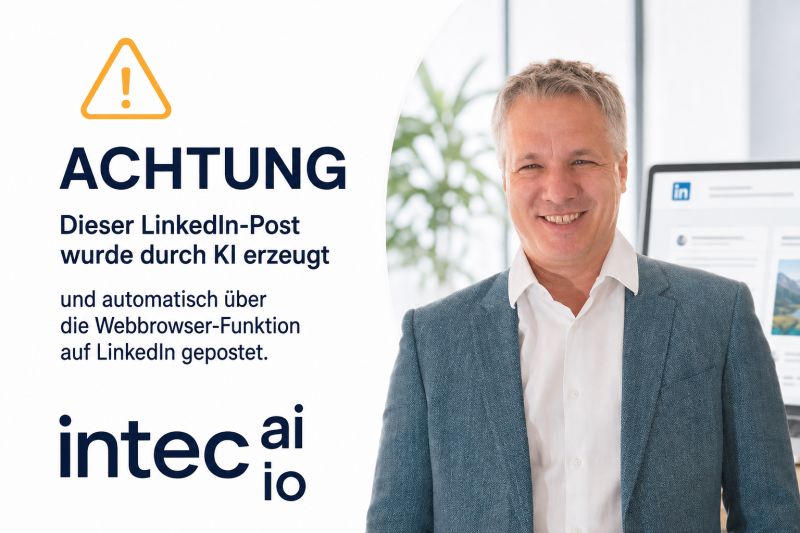 06.09.2026
· AI in Practice
06.09.2026
· AI in Practice
…browser control and published. The image was also created with AI. Operating websites via AI? Getting started is now surprisingly easy. You describe the task – the AI can read in the browser, …
View on LinkedIn ↗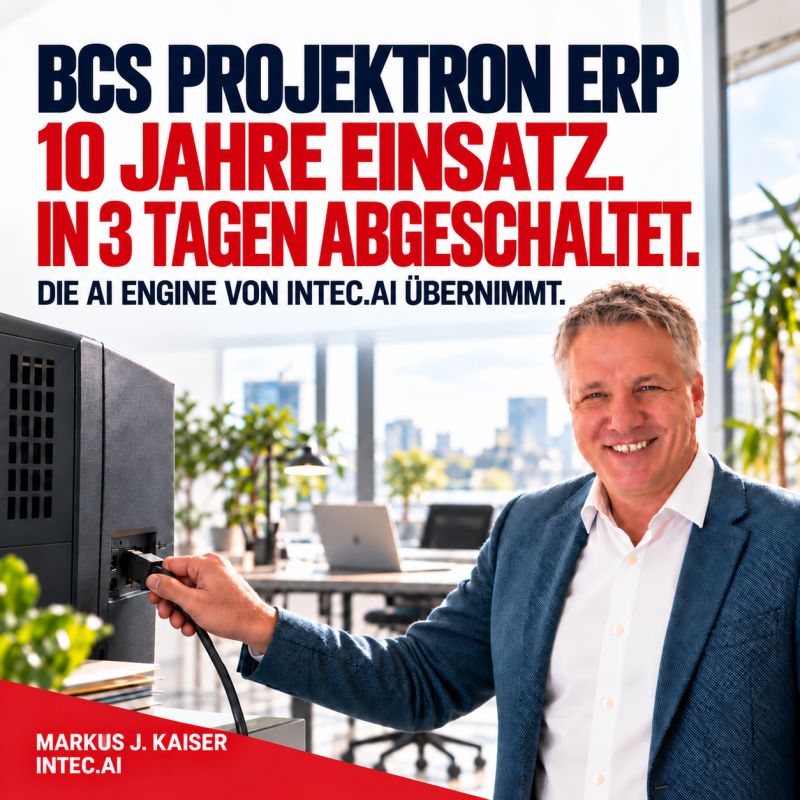 05.09.2026
· Company
05.09.2026
· Company
After ten years of using BCS PROJEKTRON ERP within Intecio GmbH, we're migrating around 10 GB of company data into the AI Engine from intec.ai. Transferring and taking over the processes took three days. After …
View on LinkedIn ↗A note whenever there's something to report — new posts, talks, cases from the yard, warehouse and transport.
No sharing with third parties. Unsubscribe any time by replying to a note.


What happens if we completely rethink a company today – no longer built around fixed software, dashboards, and standardized workflows, but around artificial intelligence?
With intec.ai GmbH, the first German company without staff, I'm pursuing exactly this question. My thesis is radically simple: an AI-native company no longer needs an employee for every task, no longer needs a separate application for every process, and no longer needs a dashboard for every decision. AI becomes the operational control layer of the company. It understands goals, makes decisions, and carries out processes itself within clearly defined limits.
This is fundamentally changing the role of enterprise software too. Instead of rigid applications with fixed interfaces, a flexible system landscape emerges that continuously adapts to the needs of users and companies. Business users increasingly describe directly what they want to achieve, while AI derives functions, workflows, and applications from that.
My masterclass shows, in practical terms and using examples from logistics among others, what the path from an ERP-shaped company to an AI-native company can look like, and what technical, organizational, and economic potential arises from it.
So in the end, the question isn't really whether companies will use AI. What matters is how long classic organizations stay competitive once AI-native companies achieve the same value creation with far fewer people, higher speed, and a completely new cost structure.

The AI-native company, the economics of intelligent execution, and the new role of people.

Logistics AI, the future of dashboards, and connecting SAP with processes that can act.

Translate the mission into your own operating model, a first process and a concrete roadmap.
Not the project — the first live process. Measurable value in the first quarter.
EWM, TM and Yard Logistics driven directly. No second platform to maintain alongside it.
Every use case comes from a real go-live — with hardware at the gate, not from a slide.
Whoever builds the process keeps it running: one point of contact for software, hardware and SAP.
Sample calculation based on the stated assumptions — not a commitment. We calculate your figures with your own volumes during the assessment.
Markus J. Kaiser connects SAP, logistics and artificial intelligence: with INTECIO he brings intelligent systems into physical supply chains, with intec.ai he examines AI-native company building from the ground up.
LinkedIn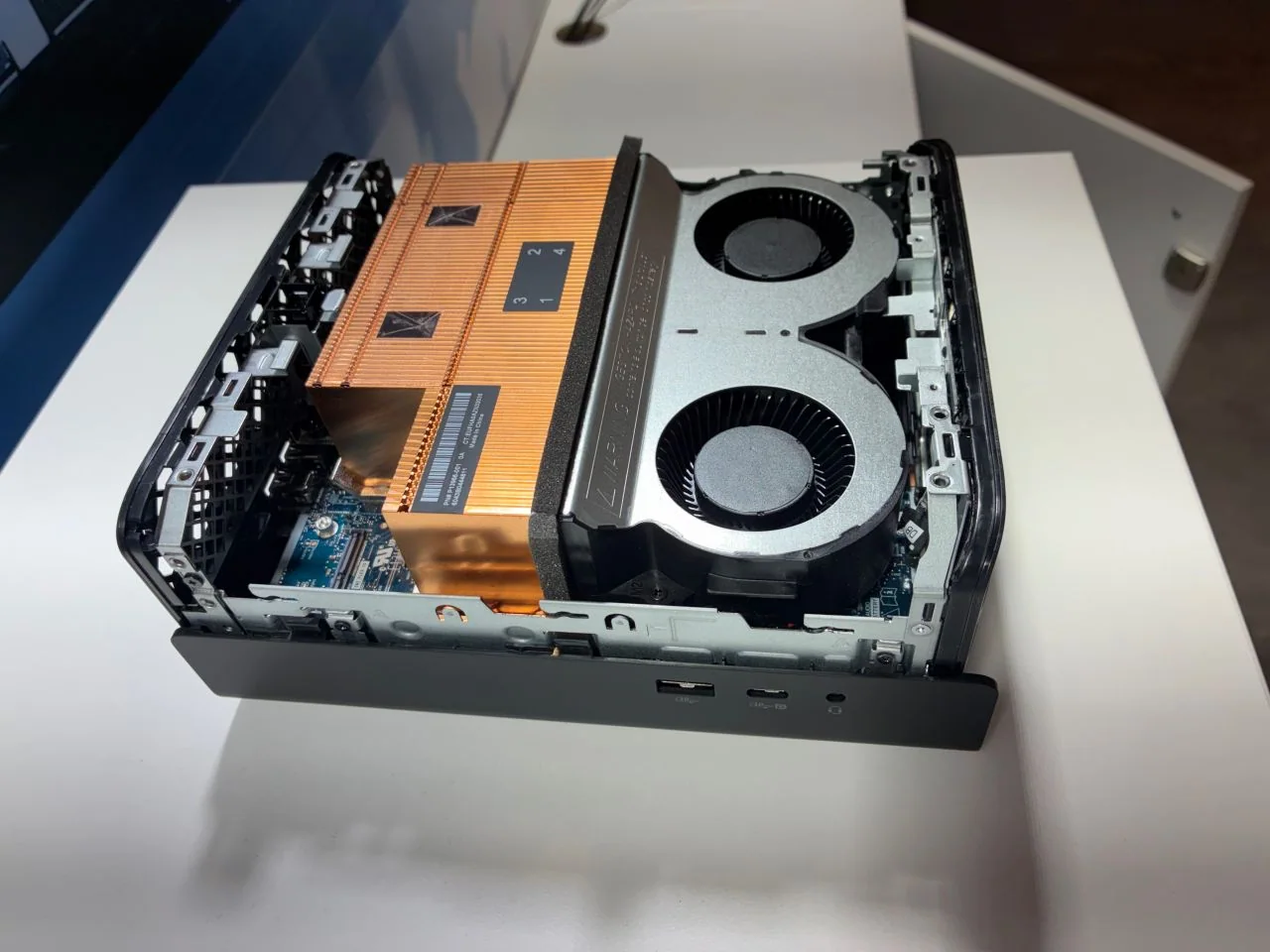
INTECIO is your partner for holistic IT and SAP consulting, with standardized and custom end-to-end solutions for digitizing the entire supply chain.
Want to automate your warehouse, logistics, production and transport processes? Then we're the right people to talk to.
We simplify your process chains for logistics, production, warehousing and transport with the right software and hardware.
Consulting, training, software, hardware and on-site implementation — all solutions under one roof.
A concrete problem, a tight timeframe — we'll get back to you.
Please fill in all fields.
INTECIO GmbH
Augustusplatz 1–4, 04109 Leipzig
+49 (0) 341 989 846 50 · office@intecio.com
Markus Kaiser · Christian Holzmann (Prokurist)
SAP and other SAP products named here are trademarks of SAP SE.
Images: Shutterstock / Adobe Stock
This site sets no cookies and tracks nothing. Only the talking face establishes a connection to its provider — your IP address is processed there. Your choice is remembered locally by the browser.